


Porsche winter prep for your first winter with a Macan or Cayenne.
Your first winter with a Porsche Macan or Cayenne? Learn how to identify your tires, choose a winter set and confirm fitment with Porsche Nashua service.
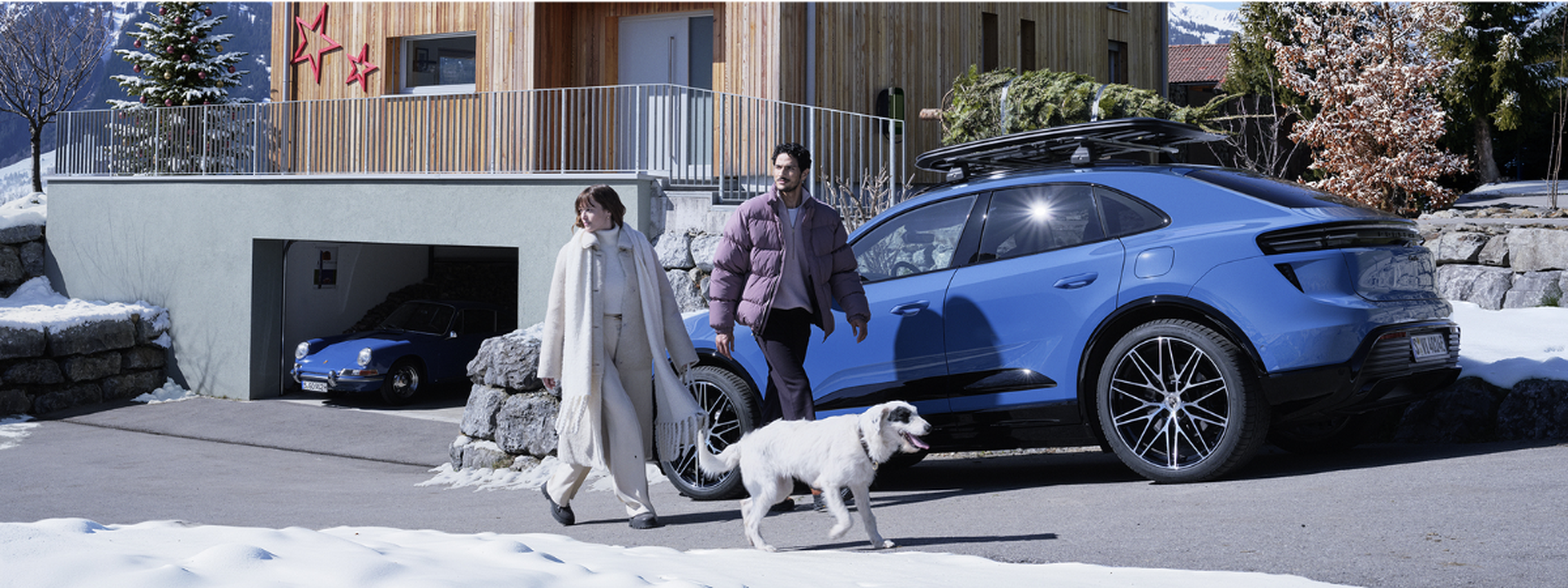
Porsche winter prep guide.
Your first step in Porsche winter prep is identifying the tires currently installed on your Macan or Cayenne. Check the exact tire model, front and rear sizes, condition and seasonal designation. If you have summer tires, make arrangements for cold-weather driving before temperatures consistently fall. If you already have all-season tires, your commute and ability to avoid storms will help determine whether a dedicated winter set makes sense.
A new Porsche can introduce a few unfamiliar details, including different tire sizes at the front and rear and Porsche approval markings on the sidewall. This guide from Porsche Nashua explains what to look for and what information to bring when discussing winter fitment with Porsche service.
Start with the tires actually on the vehicle.
The wheels you chose, the vehicle’s equipment and any previous tire replacements can affect what is installed. For a pre-owned Porsche, the original equipment list may describe a different set from the tires on the vehicle today.
Read the brand and full tire model name from the sidewall. Photograph the size and other markings on a front tire and a rear tire. Then check the manufacturer’s information for that exact product.
Summer tires are designed for warmer conditions. Their presence makes seasonal planning a priority, even if the forecast shows dry roads.
All-season tires cover a wider range of temperatures and conditions. How well they suit your winter depends on the particular tire, its remaining tread and the roads you need to drive.
Winter tires use compounds and tread designs intended for cold-weather traction. They are a seasonal choice, so plan for a changeover when warmer weather returns.
If the sidewall information leaves you uncertain, send the photographs to Porsche Nashua’s service team and ask for help identifying the tires.
Understand what the Porsche approval marking means.
You may find an N-marking on the sidewall. It identifies a tire specification tested and approved by Porsche. Depending on the tire and vehicle application, the marking can include additional letters and numbers.
Porsche-approved tires exist in summer, winter and all-season categories. You still need to identify the tire’s seasonal purpose.
For a first-time owner, ask service to confirm both whether the tire is appropriate for your exact Porsche and whether it suits the conditions in which you intend to use it.
Decide around your least flexible winter drive.
Think about the trip you have to make when delaying departure is difficult.
If you leave Hollis before sunrise, travel from Merrimack into Nashua on the Everett Turnpike or regularly drive between Amherst and Bedford, consider the local streets at either end of the journey. Most of your mileage might be on treated pavement, while a slippery hill or shaded turn creates the most demanding part of the drive.
A dedicated winter set makes a stronger case when you routinely encounter snow, icy surfaces or roads that have not yet been treated. It also deserves consideration if you regularly travel farther north during winter.
Drivers who mainly use cleared roads and can postpone travel during storms may find suitable all-season tires meet their needs. Have their condition assessed before making that decision.
If your Porsche has all-wheel drive, include braking and steering in the calculation. Getting moving on a slippery road is only one part of the trip. Tire grip also matters when you slow for an exit or turn downhill toward an intersection.
Plan the changeover before the first snowfall.
Porsche’s seasonal guidance uses approximately 45°F, or 7°C, as a reference point for considering winter tires. Treat that as a planning guide alongside your tire manufacturer’s instructions and your expected driving conditions.
Look at the temperatures during your actual commute. A mild afternoon in Nashua can follow a much colder morning departure from New Boston or Windham.
Once you identify summer tires on your vehicle, discuss the timing of a seasonal changeover. Waiting for snow to appear in the forecast can leave less time to confirm fitment and arrange installation.
Confirm fitment using your exact vehicle.
A winter set should be selected for your Porsche’s VIN, model year, model variant and equipment. “Fits a Macan” or “fits a Cayenne” leaves important questions unanswered.
For a 2026 vehicle, make sure the recommendation applies to the correct model and powertrain. A tire or wheel recommendation for a different generation or variant needs its own compatibility check.
Ask Porsche service to confirm:
The approved front and rear tire sizes.
Wheel dimensions and clearance for the installed brakes.
Appropriate tire load capacity and speed rating.
The applicable Porsche-approved tire specification.
Tire-pressure monitoring compatibility and setup.
Cold inflation pressures for the approved combination.
Your vehicle may use a staggered setup, meaning different tire or wheel sizes at the front and rear. Read both axles before requesting a quote. A plan to use the same size at all four corners requires approval for your specific vehicle.
Compare tires alone with a complete winter set.
You may be able to install winter tires on your existing wheels. This limits the initial purchase to compatible tires and installation, but requires seasonal mounting and balancing.
A complete winter wheel and tire set gives you separate mounted assemblies. Compare the upfront wheel costs with the recurring cost of changing tires on your existing wheels. Ask whether the quote includes compatible sensors, initial mounting and balancing.
Porsche Nashua also offers seasonal tire storage, giving you a place to keep your off-season tires without taking up space in your garage or transporting them for each changeover. Ask the service team about storage arrangements and pricing when discussing your winter setup.
If you are considering a smaller winter wheel, have brake clearance and the complete tire-and-wheel combination confirmed before ordering.
Ask for the proposed setup in writing. Keeping the specifications with your service records makes future replacements and seasonal appointments easier to arrange.
First-winter ownership questions.
Choosing two or four winter tires.
Use winter tires at all four wheel positions in the approved configuration. Mixing winter tires with another seasonal category can create an imbalance in grip during braking and turns.
Reusing wheels from your previous Porsche.
Have the complete specifications checked against the new vehicle’s VIN and equipment. Matching diameter alone does not establish compatibility.
Inspecting nearly new tires.
Check pressure, tread wear and visible condition, and report vibration or repeated pressure loss. Low mileage does not establish that the tire is suitable for winter.
Checking more than tires before cold weather.
Test the wipers, washers, lights and defrosting. Confirm that washer fluid has appropriate freeze protection. If your Porsche is electric or a plug-in hybrid, review its charging and cold-weather instructions before longer journeys.
Arrange your first winter fitment check.
Bring your VIN, front and rear tire photographs and a description of your daily route. That gives Porsche service a starting point for identifying your current setup, comparing winter options and arranging storage for your off-season tires. Schedule a service visit with Porsche Nashua before your first unavoidable cold-weather journey.
About our Porsche Center.
Porsche Nashua is located at 9 Northeastern Boulevard in Nashua, New Hampshire. Our Porsche Center serves owners across southern New Hampshire with new and pre-owned Porsche vehicles, Porsche service, Genuine Porsche Parts and seasonal tire storage.